
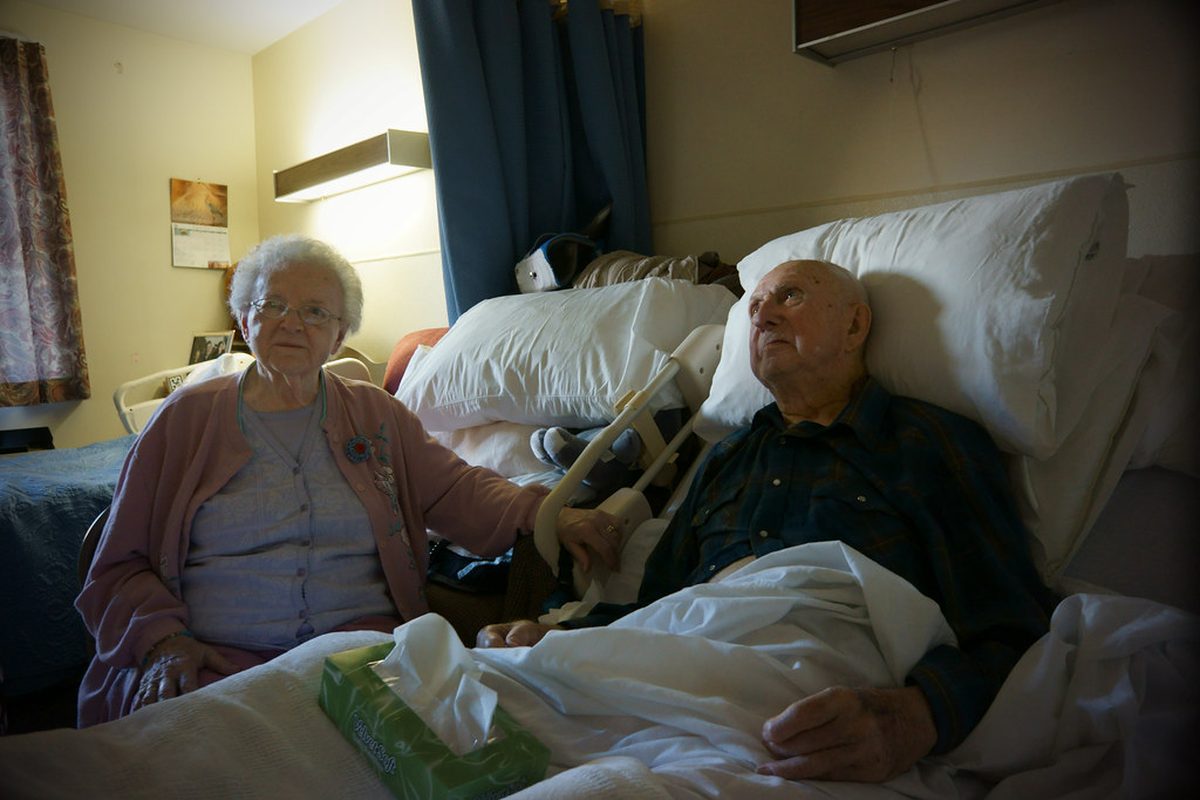
An older adult in a hospital should not be alone for long stretches, especially overnight. Hospitals are built to treat illness, not to watch one person continuously. Someone at the bedside catches confusion early, presses the call button when your mother will not, hears the instructions she will not remember, and stops the unassisted trip to the bathroom that ends in a fall.
This is not a criticism of nurses. A nurse on a medical floor is responsible for several patients at once and cannot be in one room. The gap is structural, and families feel it most acutely between about ten at night and six in the morning.
Why should an older adult not be alone in the hospital?
Four specific risks account for most of what goes wrong, and every one of them is reduced by presence.
Delirium
Delirium is a sudden change in attention and thinking — confusion that comes on over hours or days, often worse at night. It is common in hospitalized older adults and is triggered by the things a hospital does routinely: broken sleep, unfamiliar rooms, pain, dehydration, infection, anesthesia and new medications.
It is easy to miss and easy to misread as dementia or "just being tired." A familiar person is often the first to notice, because the family knows what this person normally sounds like. What helps is unglamorous and constant: glasses on, hearing aids in, curtains open in daytime, the clock and the calendar visible, saying the day out loud, keeping the room quiet at night, and encouraging fluids and safe movement when the medical team permits it.
Call buttons that are not answered at three in the morning
A call light is a queue, not an alarm. Overnight the queue is longer and the staff is thinner. A three-minute wait is not clinically dangerous, but a person who needs the toilet urgently and has waited three minutes will very often stop waiting, and get up alone in a dark unfamiliar room, in socks, with an IV pole and a bed rail in the way.
Missed instructions
Rounds happen once a day, sometimes early, sometimes for four minutes. The physician explains what changed, what the new medication is for, what happens next. A patient who is sedated, in pain, hard of hearing, or simply overwhelmed retains almost none of it. There is nobody to ask the follow-up question, and the family hears a garbled version that evening.
Falls
Hospital falls happen mostly on the way to the bathroom, usually at night, frequently in a patient who was steady at home. Add a new sedative, an unfamiliar layout, a tethered IV line, and a bed rail to climb over, and a person who has never fallen in her life can go down in a strange room at two in the morning.
What does a hospital sitter actually do?
A sitter is a trained non-medical caregiver who stays with your parent so the room is not empty. The work is presence and observation, plus the ordinary human help nurses do not have time to give.
- Stays awake and in the room, including overnight
- Presses the call button and, when necessary, walks out to find someone
- Helps with toileting and getting to the bathroom safely, with nursing approval on mobility
- Assists with meals — opening containers, cutting food, encouraging fluids
- Reorients a confused patient calmly and repeatedly
- Keeps glasses, hearing aids, dentures, phone and water within reach
- Repositions and adjusts pillows for comfort with staff guidance
- Writes down what the physician said during rounds, and the questions the family wants asked
- Notices change — new confusion, more pain, a shift in breathing or color — and alerts nursing immediately
- Calls the family with real information instead of guesses
- Keeps a frightened person company at four in the morning
What does a sitter not do?
This is worth being precise about, because the boundary is a licensing matter, not a preference. We are licensed in Texas for Personal Assistance Services, which is non-medical care.
| Task | Hospital nursing staff | Non-medical sitter |
|---|---|---|
| Medications, injections, IV lines | Yes | No |
| Wound care and dressing changes | Yes | No |
| Clinical assessment and vital signs | Yes | No |
| Operating medical equipment | Yes | No |
| Continuous presence in the room | Not possible with several patients | Yes, the entire shift |
| Help to the bathroom, with staff approval | Yes, when available | Yes |
| Reorienting a confused patient | When time allows | Continuously |
| Writing down what the doctor said | Charted clinically | Yes, in plain language for the family |
| Calling the family with an update | Rarely, and briefly | Yes |
A sitter never replaces clinical staff and never second-guesses them. The role is to be the constant in a room where every other person rotates, and to escalate to the people who are qualified to act.
How do overnight shifts work?
Overnight is where a sitter earns their keep, because it is the worst combination of the highest risk and the thinnest staffing. Confusion peaks after dark, bathroom trips still happen, and the hallway is quiet.
Two things about how we handle nights are worth knowing. First, caregivers stay awake — this is not sleeping in a chair while a patient fends for herself, and no caregiver is ever scheduled to sleep on site. Second, nights do not cost more. The hourly rate is one flat rate, identical at two in the afternoon and two in the morning, on weekdays and weekends. Major holidays are the one exception: they are billed at time and a half. Families are often braced for a night surcharge, and there is not one.
Practical shape of it: the minimum visit is four hours, an overnight is typically eight to twelve hours, and many families use a sitter only from evening through morning while taking the daytime themselves. When a stay is long or someone should be present around the clock, 24-hour care with rotating awake caregivers covers the whole day without anyone in the family driving home exhausted at dawn.
How do families split the coverage?
Very few families can cover a hospital stay alone, and the ones who try tend to pay for it afterward. A week of sleeping upright in a vinyl recliner leaves the primary caregiver in no condition to manage the far harder weeks that follow discharge.
What works in practice is deciding in advance which hours are covered by whom, rather than improvising each evening. A common pattern looks like this:
- Family takes the daytime, when there are visitors, rounds and activity anyway
- A paid sitter covers evening through morning, which is the risky, lonely stretch
- One family member is designated the medical point of contact, so the hospital calls one number
- Somebody keeps a single running notebook in the room that every shift writes into
- Everyone agrees who is doing the discharge day, because it is a long, chaotic day
The notebook matters more than it sounds. Hospital days blur, staff change every shift, and three family members will otherwise carry three different accounts of what the doctor said on Tuesday.
Is this only for hospitals?
No, and this surprises families. The same need appears inside assisted living, memory care, skilled nursing and rehabilitation, where staffing ratios are thinner than most families expect, particularly at night and on weekends.
A resident in assisted living who has just had a hospital stay, a new fracture, a change in medication, or a sudden increase in confusion may need one-to-one attention that the community is not staffed to provide. Facilities generally allow families to bring in private support, and hospital and facility sitter services are used regularly in exactly that way.
Common reasons families arrange a sitter inside a facility:
- The first nights after a return from the hospital, when the risk of a fall or delirium is highest
- A new memory care resident who is frightened and needs a familiar face during the transition
- Someone at high fall risk who keeps getting up unassisted
- A resident refusing meals, who eats when somebody sits with her
- An out-of-state family who wants eyes in the room for a stretch
- End-of-life periods when nobody wants a parent to be alone
What should a family do before the sitter arrives?
- Tell the nurse. Introduce the sitter at the nurses' station and confirm the room's rules on visitors, chairs and overnight stays.
- Write down the essentials. Diagnoses, medications, allergies, hearing and vision needs, dementia history, what she likes to be called, and what calms her.
- Be explicit about mobility. Whether she may walk to the bathroom, needs a walker, or requires nursing for any transfer. The sitter follows the clinical team on this without exception.
- Say who gets called, and at what hour, and for what.
- Leave a question list for rounds so the doctor's visit is not wasted.
- Bring the small things that make a hospital room survivable: glasses, hearing aid batteries, a phone charger, a photograph, a blanket from home.
What about the day of discharge?
Discharge is its own hazard. It usually arrives suddenly, involves a stack of paper, a list of new medications, and instructions delivered to someone who is exhausted and eager to leave. Then a person who needed a hospital yesterday is at home tonight, and the first week after is when readmissions happen.
Having someone present who has been in the room all week helps enormously, because the sitter knows what changed and what was said. Work through our hospital discharge checklist for North Texas families before you leave the building, and put post-hospital recovery care in place before the discharge date rather than after. Care can often begin within about twenty-four hours, and there is no long-term contract, so arranging it early costs a family nothing if plans change.
How do you arrange a sitter quickly?
Usually with a phone call, often the same day. You will be asked where your parent is, what the concern is, which hours you want covered, and whether there is confusion, fall risk or dementia in the picture. Sitters can typically start within about twenty-four hours, sometimes sooner. We serve hospitals and facilities across the Dallas–Fort Worth metroplex and surrounding counties, and we assign the caregiver to the case — if the match is not right for your parent, tell us and we will send someone else.
This article is general educational information, not medical advice. Decisions about your parent's treatment, mobility, medications and discharge belong with the hospital team and her physician, who know her situation. What a family can control is whether the room is empty at three in the morning.