
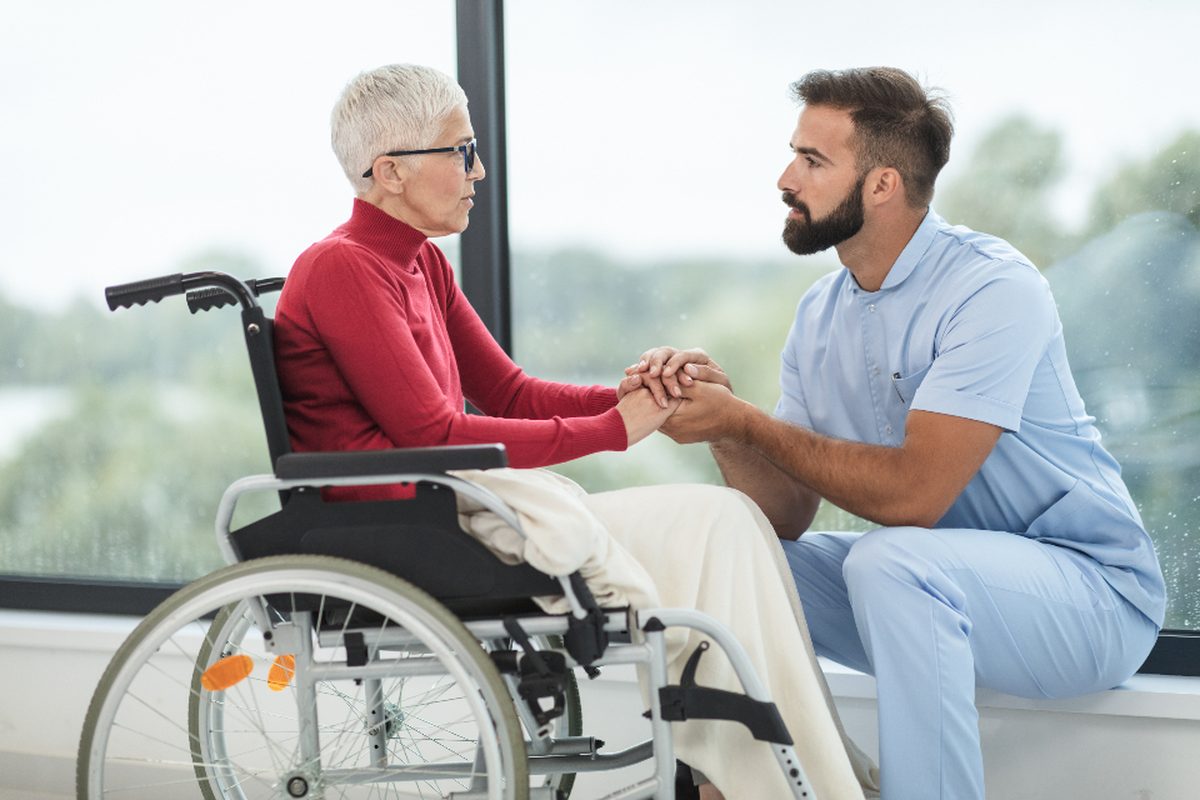
The first ninety days after a stroke are when recovery moves fastest. The brain is at its most adaptable, therapy is at its most intense, and habits set now tend to stick. It is also the window when a second hospital stay is most likely. Most of what determines how those months go happens at home, in ordinary hours, between therapy visits.
Why do the first 90 days matter so much?
After a stroke, the brain reorganizes. Undamaged areas take over some of the work the injured area used to do. Clinicians call this neuroplasticity, and it is most active in the early months. That is why rehabilitation is front-loaded, and why a person who practices daily in those months usually ends up further along than one who waits.
Two things are worth saying plainly. First, recovery does not stop at ninety days. People continue to gain function for a year and beyond, especially with continued practice. Second, the pace is uneven. There are good weeks and flat weeks, and a flat week is not a failure.
What families can control is the environment. Whether the exercises get done on non-therapy days. Whether the affected arm is used or quietly abandoned. Whether the follow-up appointments happen. Whether the blood pressure medication is taken every day. Those are home matters, not hospital matters.
What does one-sided weakness actually change at home?
A stroke on one side of the brain affects the opposite side of the body. The medical term for weakness on one side is hemiparesis; complete paralysis on one side is hemiplegia. In practice it means every two-handed task in the house is now a problem to solve: buttoning a shirt, opening a jar, cutting food, holding a plate while opening a door.
Two patterns catch families off guard.
Learned non-use. The weaker arm is slow and clumsy, so the person stops using it and does everything with the strong side. It feels efficient. It is not, because the arm that is never used keeps losing ground. Therapists work against this deliberately, and the work only holds if it continues between visits.
Spatial neglect. After some strokes, usually on the right side of the brain, a person stops attending to the left side of the world. Not blindness. The brain simply does not register that side. Someone with neglect may eat only the right half of the plate, shave only one side of the face, or bump the left doorframe every time. It is not stubbornness and it is not vanity. Approach from the stronger side at first, and place food, phone, and drink where they can be seen. A therapist will give specific strategies for the particular pattern.
How do you talk to someone with aphasia?
Aphasia is a language disorder caused by damage to the brain's language areas. It can affect speaking, understanding, reading, writing, or all four. It is critical to understand that aphasia is not a loss of intelligence. The person in front of you is the same person, thinking the same thoughts, unable to get them through a broken channel.
Nothing is more isolating, and nothing is more improved by the people in the room adjusting how they talk.
- Speak in short, ordinary sentences. Do not raise your voice and do not use baby talk.
- Ask one question at a time, and favor questions that can be answered yes or no.
- Wait. Count silently to ten before filling the gap. The word is often coming.
- Keep pen and paper, a whiteboard, or a picture board within reach; many people can write or point when they cannot speak.
- Turn off the television. Background noise makes comprehension much harder.
- Confirm what you understood: "You want the blue sweater, not the gray one?"
- Include them in the conversation. Never talk about them in the third person while they are sitting there.
A speech-language pathologist directs the actual therapy. What happens at home is practice and patience, hour after hour, and that is where a familiar caregiver who has learned the person's cues makes a visible difference.
Swallowing problems: what families need to know
Difficulty swallowing, called dysphagia, is common after a stroke and is one of the more serious risks in this period. If food or liquid goes into the airway instead of the stomach, it can cause pneumonia. Thin liquids like water and coffee are often the hardest to control, which surprises people.
Only a speech-language pathologist evaluates swallowing and sets the plan. That plan is specific to the person: a particular texture of food, a particular thickness of liquid, sometimes a particular head position. It is not something a family should improvise, and it is not something a non-medical caregiver decides.
What a household can do is follow the plan exactly and keep the general precautions everyone is usually taught: sit fully upright to eat, stay upright for about half an hour afterward, take small bites, no talking with a full mouth, no straws unless approved, and good mouth care after meals. Coughing or a wet, gurgly voice during eating is worth reporting to the clinical team the same day.
Fatigue and mood: the two most underestimated problems
Post-stroke fatigue is not ordinary tiredness. It is a heavy, disproportionate exhaustion that arrives without warning after activity that looks small from the outside. A shower can consume a morning. Families sometimes read it as laziness or depression. It is neither, and it improves slowly.
The practical answer is pacing: schedule the hardest task, usually bathing or therapy, at the hour the person is strongest, then build in rest before the next thing. Two shorter sessions beat one long one.
Mood changes are just as common. Depression after a stroke is frequent and treatable, and it is worth raising with the physician rather than accepting as understandable sadness. Some people also develop sudden crying or laughing that does not match how they feel inside; this has a name and a treatment, so mention it at the follow-up.
| Change | Who directs it | What happens at home |
|---|---|---|
| Weakness on one side | Physical and occupational therapist | Daily practice, safe transfers, standing by |
| Aphasia | Speech-language pathologist | Adjusted communication, patient practice |
| Swallowing changes | Speech-language pathologist | Follow the prescribed diet and positions exactly |
| Blood pressure and blood thinners | Physician | Reminders, refills, getting to appointments |
| Fatigue and mood | Physician | Pacing, routine, company, reporting changes |
| Bathing, dressing, meals, housework | Family and caregiver | Hands-on daily support |
Why is readmission so likely, and how do you avoid it?
Going back to the hospital in the first months after a stroke is common, and the reasons are usually mundane rather than dramatic: a fall, pneumonia after a swallowing problem, a urinary tract infection, dehydration, uncontrolled blood pressure, or medication that stopped being taken correctly once the discharge folder got buried.
The protections are equally mundane.
- Keep one current medication list and take it to every appointment.
- Never stop a blood thinner or blood pressure medication without the physician saying so.
- Book the follow-up appointments before they are needed, and arrange the ride.
- Watch fluid intake; people who fear choking often quietly stop drinking.
- Remove the fall hazards, especially in the bathroom and on the route from the bed at night.
- Report new confusion, fever, cough, or a sudden change in function the same day.
Our guide to preventing a hospital readmission covers the first thirty days in more detail, and the hospital discharge checklist is worth working through before the first night home.
Everyone should still know the stroke warning signs
Someone who has had one stroke is at higher risk of another. Every person in the house should be able to recognize the signs and call 911 immediately, noting the time symptoms began.
- Face drooping on one side, or an uneven smile
- Arm weakness, or one arm drifting down when both are raised
- Speech that is slurred, strange, or absent
- Time to call emergency services, even if the symptoms go away
- Also: sudden severe headache, sudden loss of vision, sudden loss of balance
Where does a caregiver fit into stroke recovery?
Therapists come a few times a week. The other hundred-odd waking hours are where recovery is either reinforced or quietly lost.
A non-medical caregiver providing stroke recovery care at home covers those hours: bathing and dressing that now take two people's worth of hands, meals prepared to the texture the speech therapist specified, medication reminders on schedule, encouragement to use the weaker arm at breakfast, company for someone who cannot yet make conversation easily, and a ride to the neurology follow-up.
Safe movement is the piece families most often underestimate. Helping someone with one weak side out of bed, onto a shower chair, and into a car is a skill, and doing it wrong hurts both people. Transfer and mobility assistance exists precisely for this.
We are licensed in Texas for Personal Assistance Services, which is non-medical care. Our caregivers do not perform therapy, wound care, or injections, and do not administer medication; they give reminders and support the plan your clinicians set. Care is arranged in visits of four hours or longer at one flat hourly rate, the same day, evening, weekend, or overnight, and it can often begin within twenty-four hours. If round-the-clock coverage is needed, 24-hour care is provided by rotating caregivers who stay awake, not a live-in.
What families should expect of themselves
Picture a common situation. A husband who has never cooked is now managing a thickened-liquid diet, three therapy schedules, and a wife who cannot tell him what she needs. He is doing it on four hours of sleep, and he tells everyone he is fine.
That arrangement breaks in about six weeks. Bringing in help early is not giving up; it is the thing that lets a spouse still be a spouse rather than a full-time aide. Even two visits a week changes the shape of the month.
This article is educational and is not medical advice. Every stroke is different, and the plan for swallowing, therapy, activity, and medication must come from the physician and therapists who know the case. If a parent or spouse has come home after a stroke anywhere in North Texas, contact our care team for a free in-home assessment and an honest conversation about what the first ninety days will take.