
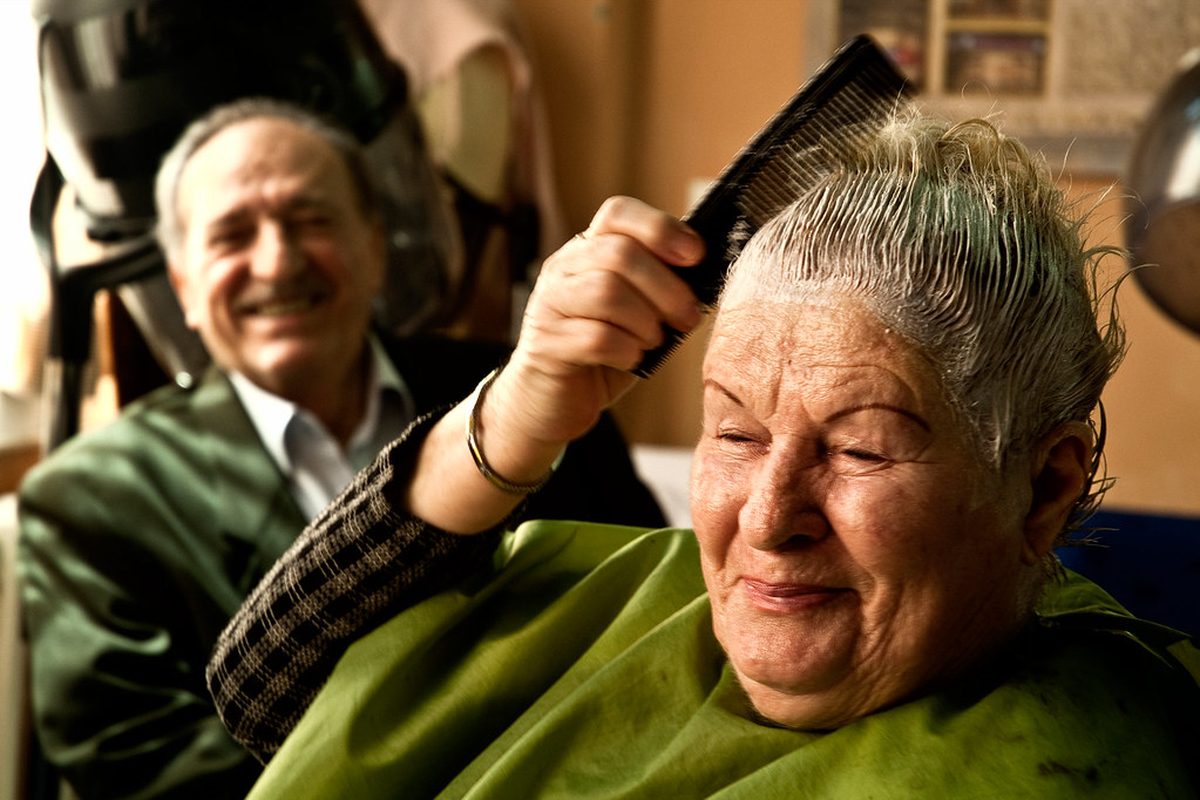
A parent with dementia who refuses to bathe is almost never being difficult. She is cold, frightened of the water, ashamed to undress in front of her daughter, or convinced she already washed this morning. The way through is to lower the stakes: warm the room first, wash in pieces, drop the daily standard, and let someone who is not her child do the asking.
This is one of the most exhausting standoffs in dementia care, partly because it repeats. You win on Tuesday and start over on Thursday. It is also one of the few where a small change in approach produces a genuinely different result, so it is worth understanding what is actually going on before the next attempt.
Why does a parent with dementia refuse to bathe?
There is usually a specific reason, and it is rarely the one stated out loud. Working out which of these applies in your house is most of the solution.
- Cold. Older adults lose body heat quickly. Undressing in a cool bathroom and standing wet in moving air is genuinely unpleasant, and the memory of that cold is what she reacts to next time.
- Fear. Water sprayed at the face is startling. A slick tub floor feels unsafe to anyone unsteady, and stepping over a high tub wall is frightening when balance is poor.
- Modesty. A woman who has never been naked in front of her children is not going to start now. The shame is real, and it does not fade because you are family.
- Loss of control. Bathing may be one of the last decisions she still gets to make. Refusing is a way of saying that she is still a person, not a task.
- She does not know she needs it. Dementia dulls the sense of smell and erases the record of the last bath. She sincerely believes she washed today.
- The task is too complicated. Bathing is a long sequence of steps. Without the ability to hold that sequence, the whole thing feels overwhelming and refusal is the simplest exit.
- Depth perception and contrast. A dark bath mat can read as a hole; a white tub in a white room can be hard to see at all.
- Pain. Arthritis, a healing wound, or sore skin makes washing hurt, and someone who cannot explain that will simply say no.
- Depression or apathy. When nothing feels worth the effort, personal care goes first.
How often does an older adult actually need a bath?
Less often than most families assume, and holding the line on daily showers usually costs more than it gains. For an older adult who is not incontinent and not sweating heavily, a full bath or shower once or twice a week is generally enough, provided that the areas that matter are cleaned daily: face, hands, underarms, groin, and feet.
That daily wash is the real hygiene requirement. Skin problems and odor come from those areas being neglected, not from skipping a shower. Older skin also dries and tears easily, so more frequent bathing with hot water and harsh soap can do harm. Lowering the target from a daily shower to a daily wash plus two full baths a week turns an unwinnable fight into a manageable one.
What actually helps? Start by lowering the stakes
Set the room up so the answer is easier to say yes to, then make the request small.
- Heat the bathroom first. Run a space heater or hot shower for ten minutes beforehand. Warm the towels in the dryer. Cold is the most common and most fixable reason for refusal.
- Pick her best hour. Everyone has one. If mornings are calm, bathe in the morning; if late afternoon brings agitation, never schedule it then. Match her lifetime habit, too, since a woman who bathed at night for sixty years will resist a morning shower.
- Do not ask a yes-or-no question. Do you want a shower? invites no. The water's warm, let's get you comfortable, said while handing her a towel, invites cooperation.
- Use a handheld shower head and start at the feet, working up. Water on the face and head is the usual flashpoint; save hair for a different day or the kitchen sink.
- Keep her covered. A towel or a robe over the shoulders while you wash beneath it preserves modesty and warmth at once, and it lowers resistance more than almost anything else.
- Make the tub safe and visible. A shower chair, grab bars, a non-slip mat, and a colored towel over the tub edge for contrast all reduce fear. Our home fall risk checklist covers the rest of the bathroom.
- Cue one step at a time. Say here's the washcloth, then wait. Doing part of it herself keeps dignity in the room and often keeps her cooperating.
- Give it a reason she cares about. The doctor's appointment, church, a grandchild coming by. An event is more persuasive than hygiene.
- Add something pleasant. Her music, her own soap, a warm drink afterward. You are trying to build a better memory of bathing, not just complete one.
- Stop if she becomes distressed. Finish with a quick wash and try again tomorrow. Forcing it teaches fear, and that fear is what you will meet next time.
How do I give a sponge bath instead?
A bed or chair bath, sometimes called a sponge bath, does everything a shower does for hygiene and skips the parts that frighten people. It is the standard fallback when a tub or shower has become a battle, and there is nothing second-rate about it.
Warm the room. Sit her in a chair or on the bed with a towel underneath. Use two basins of warm water, one with a small amount of mild soap and one to rinse, or no-rinse cleansing wipes designed for this. Wash one area at a time, uncovering only that area and drying it before moving on: face and neck, arms and hands, chest, abdomen, legs and feet, then the back, and the perineal area last with a fresh cloth. Pat dry rather than rubbing, check the skin over the tailbone, hips, and heels while you go, and finish with a fragrance-free moisturizer.
A no-rinse shampoo cap handles hair on the days a shower does not happen. Keeping teeth, nails, and feet cared for matters just as much; feet in particular need checking in anyone with diabetes or poor circulation.
| What she says or does | What is often behind it | What to try |
|---|---|---|
| I already had one | No memory of the last bath, blunted sense of smell | Skip the argument; tie it to an outing or appointment |
| It's too cold | Genuine heat loss, a cool bathroom | Heat the room first, warm towels, keep her covered |
| Pushes the shower head away | Water on the face is startling | Handheld head, start at the feet, wash hair separately |
| Refuses to undress | Modesty, especially with an adult child | Wash under a towel or robe; a same-sex caregiver often helps |
| Grabs the doorframe, freezes at the tub | Fear of falling or poor depth perception | Shower chair, grab bars, contrasting mat, hand on her arm |
| Cries out or pulls away when moved | Pain in shoulders, hips, or skin | Ask the doctor about timing pain relief before bathing |
| You're not the boss of me | Loss of control | Offer two choices, hand her the washcloth, let her lead a step |
| Refuses you specifically, every time | The role reversal itself | Have a trained caregiver do it instead |
What should I never do?
Do not argue about whether she smells. Do not undress her while she is protesting. Do not force a shower because a schedule says Tuesday. Do not scold, and do not let frustration into your voice, because tone survives long after the words are gone. And do not treat one refusal as permanent; the same person often says yes an hour later, having no memory of saying no.
If refusal is total for weeks, look at what else changed. New refusal to bathe can accompany pain, a urinary tract infection, depression, or a medication change, and that is a conversation for the physician rather than another attempt on Saturday.
Why does a caregiver often succeed where a daughter cannot?
Because the obstacle is frequently you, and that is not a criticism. Your mother spent decades bathing you. Being undressed by her own child inverts a lifetime of roles, and the shame of that is often stronger than the shame of being dirty. A professional carries no such history. Being washed by someone whose job it is feels closer to a nurse than to a humiliation, which is why families are so often astonished that the same parent who fought them for a month cooperates in the first week with someone else.
Training is the other half. Our caregivers do this work daily through in-home personal care: warming the room, sequencing the steps, keeping a towel over the shoulders, watching the skin, and stopping before distress becomes fear. When memory loss is the driver, the same visit draws on the redirection techniques used in in-home memory care, and there is no hurry, because the caregiver is not trying to fit bathing between work and school pickup. If incontinence is part of the picture, discreet hygiene support handles that too.
Practically: one flat hourly rate, the same day, evening, weekend, and overnight, with visits starting at a four-hour minimum and no long-term contract. We match the caregiver to your parent and you can request a different match at any time, which matters here, since many families ask for a caregiver of the same sex for bathing help. The in-home assessment is free, and care can often begin within about a day of it. If bathing has become the fight that defines your week, tell us about it and we will talk through what a shift would look like.
One note in closing: this article is educational, not medical advice. We provide non-medical personal care, and any new refusal, skin breakdown, wound, or sudden change in behavior should be reported to your parent's physician.