
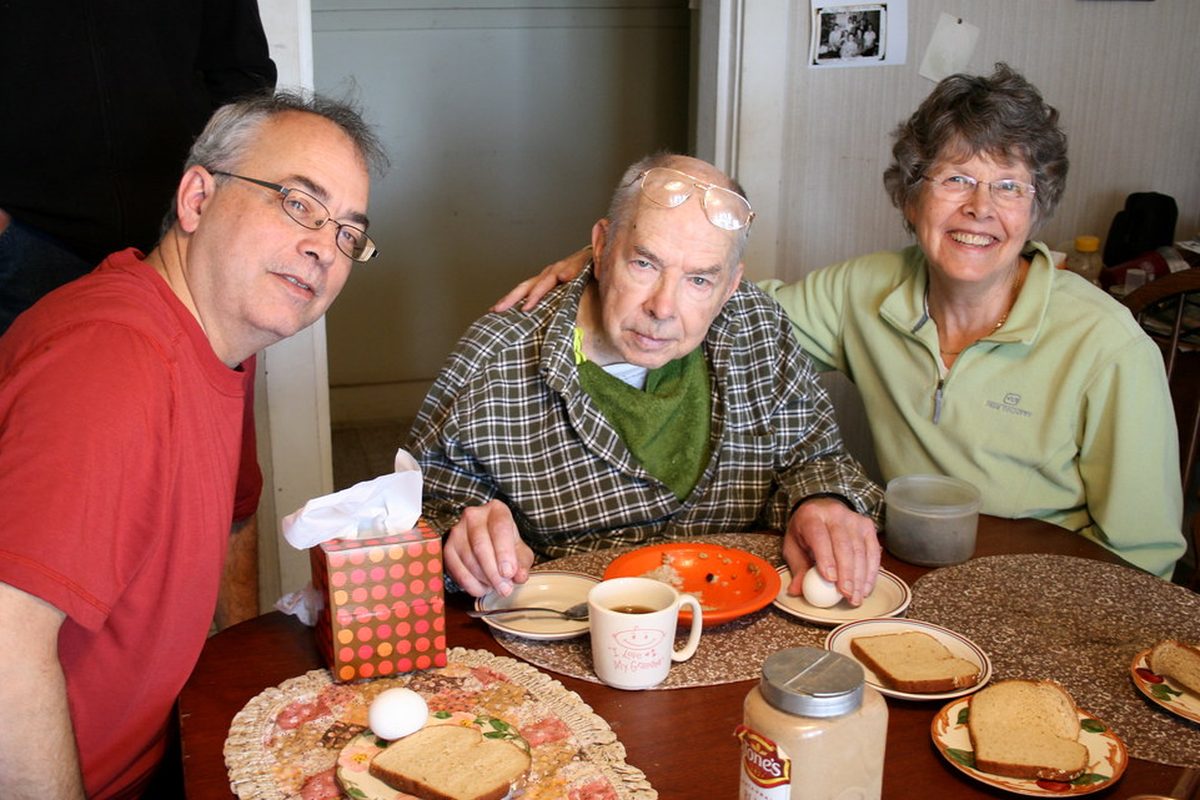
What helps most with appetite loss in an older adult is not more food on the plate. It is smaller portions offered more often, stronger flavor, food that takes no effort to eat, and company at the table. Appetite in later life is fragile for real reasons, and almost all of them respond better to changing the conditions than to encouragement.
Families usually notice it sideways. The same casserole comes back out of the refrigerator three days running. A dinner plate goes back to the kitchen with the food rearranged rather than eaten. Then one day a shirt hangs off the shoulders, or a wedding ring turns loosely on a finger, and it becomes clear this has been going on for months.
Why does appetite fade in older adults?
Rarely for one reason. Usually four or five small things stack up, each of which would be manageable alone.
Taste and smell change
Smell does most of the work in flavor, and it dulls with age. Food that once tasted like something now tastes like texture. People describe everything as bland, then lose interest in eating it. Cooking the family's usual recipes exactly as always can make the problem worse, because the seasoning that was right twenty years ago is not registering now.
Medications
A great many common prescriptions blunt appetite, cause nausea, dry the mouth, or leave a metallic taste. Several taken together compound the effect. This is worth raising with the physician or pharmacist by name, because sometimes a timing change or an alternative helps considerably, and nobody will look unless the family asks.
Teeth, gums, and dentures
This is the cause most often missed, because people do not volunteer it. A sore tooth, a denture that no longer fits after weight loss, a dry mouth that makes bread impossible to swallow: any of these will quietly reduce a diet to soft, bland, easy food. If your parent has stopped eating meat, salad, or anything crunchy, look in the mouth before you look anywhere else.
Depression and grief
Loss of appetite is one of the classic signs of depression, and depression in older adults often shows up as not eating, not sleeping, and not wanting to go anywhere, rather than as visible sadness. After a spouse dies, the drop can be sharp. Cooking for one feels pointless, and the table itself is a reminder.
Eating alone
People eat more in company. It is one of the most consistent things about human beings, and it does not stop being true at eighty. A widow who cooked for a family for fifty years will stand at the counter with crackers rather than set a place for herself.
Fatigue from cooking
Standing at a stove is physical work. Add a walker, a bad shoulder, poor eyesight, and a kitchen that requires reaching, and the effort cost of a hot meal exceeds the appetite for it. The result is not a decision to stop eating. It is a series of individually reasonable choices to have toast instead.
Slower digestion and constipation
The stomach empties more slowly with age, so a person feels full after a few bites. Constipation, which is extremely common and frequently untreated, kills appetite entirely. It is worth mentioning to the doctor rather than working around.
Why does the weight loss matter so much?
Because in older adults, weight is rarely lost from fat alone. Muscle goes with it, and muscle is what stands a person up out of a chair, catches a stumble, and gets someone through a hospital stay.
The chain is unglamorous and predictable. Less muscle means less strength. Less strength means more falls and slower recovery from anything. Add poor protein intake and the immune system and skin suffer too, which is how a small pressure point becomes a wound and a minor illness becomes an admission.
A practical marker families can use: unintentional weight loss of about five percent of body weight in a month, or ten percent over six months, is worth a call to the physician. For a 150-pound parent that is roughly seven pounds in a month. Keep a scale in the bathroom and write the number down weekly rather than trying to judge by eye, because the people who see someone daily are the last to notice. Steady unexplained weight loss also sits near the top of the list of signs a parent needs help at home, and it rarely arrives on its own.
What actually helps?
| What is going on | What tends to help |
|---|---|
| Food tastes like nothing | Lemon, vinegar, herbs, garlic, black pepper, a little parmesan; serve food hot, since aroma drives appetite |
| Full after three bites | Small plates, five or six small eatings a day instead of three meals |
| Too tired to eat a whole meal | Put the highest-calorie, highest-protein food first, while energy is highest |
| Chewing hurts or dentures slip | A dental visit first; meanwhile soft proteins such as eggs, fish, beans, yogurt, ground meat in sauce |
| Mornings are the best hours | Make breakfast the real meal of the day and keep supper light |
| Eating alone | Company at the table, a standing lunch date, someone who eats alongside |
| Cooking is exhausting | Someone else cooks, portions, labels, and leaves the refrigerator ready |
Beyond that, a handful of things reliably move the needle:
- Make every bite count. Whole milk instead of skim, butter or olive oil stirred into vegetables and potatoes, cheese on eggs, peanut butter on toast, cream in soup. When someone eats very little, this is not the moment for low-fat versions of anything unless a physician has said otherwise.
- Protein at every eating, not just at dinner. Eggs, Greek yogurt, cottage cheese, tuna, beans, chicken. Older bodies use protein less efficiently, so spreading it through the day works better than one large evening portion.
- Serve less than you think. A full plate is discouraging. A small plate that gets finished is a success, and seconds can always be offered.
- Keep food visible and ready. Cut fruit in a clear container at eye level beats whole fruit in a drawer.
- Do not fight about it. Pressure and hovering reliably reduce intake. Offer, sit down, eat something yourself, and let it be ordinary.
What about drinking enough?
Thirst weakens with age, so many older adults are mildly dehydrated most of the time without ever feeling thirsty. The effects look exactly like other problems: confusion, dizziness, fatigue, constipation, and falls. Families often chase a memory problem that is partly a fluid problem.
What works is a visible glass that gets refilled on a schedule rather than a reminder to drink more. Fluid counts in many forms: soup, milk, decaffeinated tea, gelatin, watermelon, oranges, yogurt. If someone avoids drinking because of trips to the bathroom or incontinence worries, that is the problem to solve, not the drinking. Anyone on a fluid restriction for heart or kidney reasons should follow the physician's number instead of general advice.
The social half of eating
Ask an older adult who has stopped eating properly what changed, and the answer is often not about food at all. It is that the other chair is empty.
Meals were structure. They set the shape of a day, they were how a household showed affection, and they were a reason to get dressed. Take away the person you cooked for and the whole apparatus loses its point. This is why a plate of food delivered and left on a counter often goes untouched while the same food eaten in company disappears.
It is also why companion care often does more for a parent's nutrition than any recipe. A caregiver who sits down at the table, makes conversation, and treats lunch as an occasion rather than a task changes the conditions under which eating happens. Where isolation is the deeper issue, it deserves to be treated as a health problem in its own right rather than as a mood that will pass.
What a caregiver does about appetite
Senior Care of North Texas is licensed for Personal Assistance Services, License #020448, which is non-medical. Our caregivers do not prescribe diets, give supplements on their own initiative, or make clinical judgments. What they do about food is practical and, over weeks, it adds up.
- Shop for what the household actually eats, and read labels against any diet the physician has set.
- Cook real meals in the home, so the kitchen smells like food again, which is itself an appetite cue.
- Portion and label extra servings for the days between visits.
- Sit down and eat with the client rather than serving and standing by.
- Keep a fresh glass of water within reach and refill it through the shift.
- Write down what was actually eaten and drunk, so the family and the physician have something real to look at instead of a guess.
- Wash up afterward, which is often the reason a person avoided cooking in the first place.
That is the core of meal preparation and light housekeeping: a shift long enough to shop, cook, share the meal, and leave the kitchen ready for tomorrow. Our minimum visit is four hours, which is roughly what that takes when it is done properly rather than rushed.
When to involve the doctor
Call the physician for steady unintentional weight loss, for a new difficulty with swallowing or coughing during meals, for mouth pain or ill-fitting dentures, for persistent nausea, or when withdrawal and low mood accompany the loss of appetite. Bring the food and fluid log with you. Ask specifically whether any current medication could be the cause.
If cooking, shopping, and eating alone have become the hardest part of the week, we can help. The in-home assessment is free, care can often begin within twenty-four hours, and you can start the conversation through our contact page.
This article is educational and is not medical advice. Weight loss, swallowing trouble, and nutrition questions belong with your parent's physician, and any diet restriction they have set takes precedence over general guidance.