
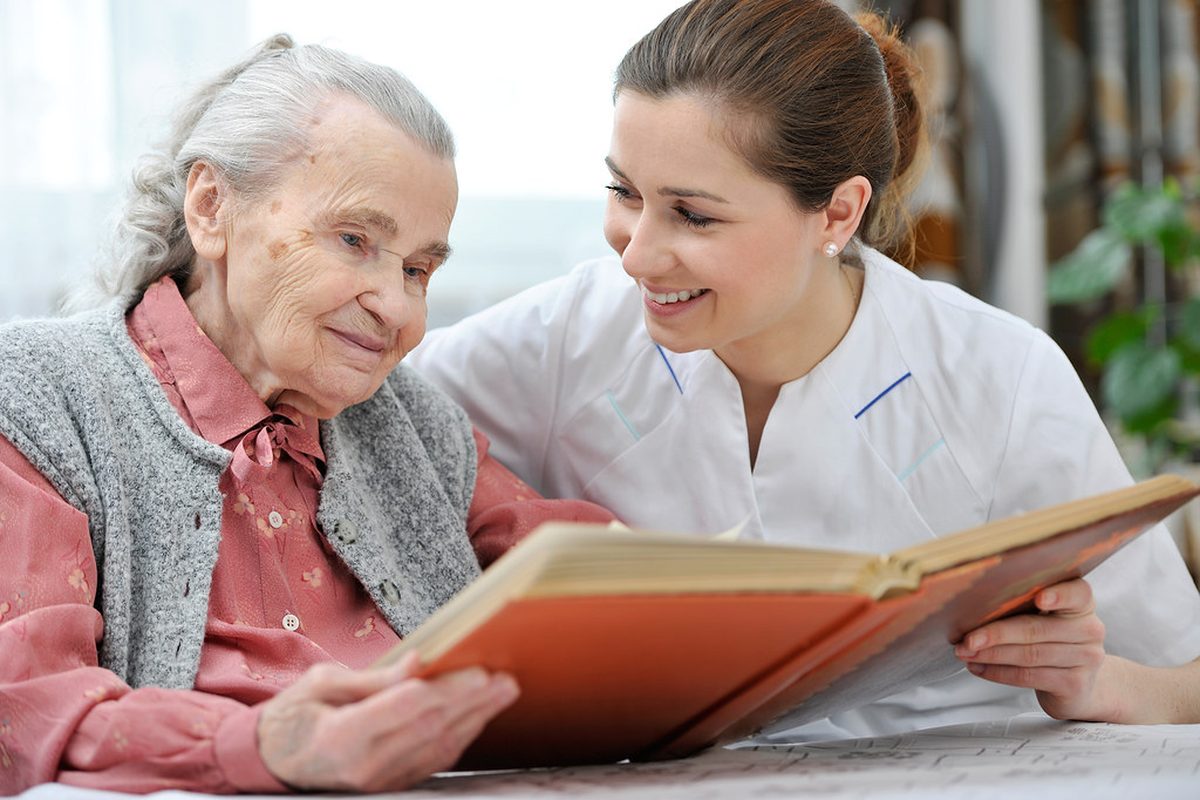
Loneliness is treated as a health issue in older adults because it does not stay emotional. Sustained isolation shows up in the body and in behavior: worse sleep, less movement, poorer eating, skipped medications, more alcohol, slower recognition of new symptoms, and less willingness to call anyone when something is wrong. It is a risk factor, not a mood.
That distinction matters because families tend to file loneliness under "sad but not urgent." It sits below falls, medications and driving on the list of things to fix. In practice it quietly makes each of those worse.
What is the difference between being alone and being lonely?
They are two different things, and confusing them leads families to the wrong solution.
- Social isolation is objective. It is how few contacts a person actually has: who they see, who they speak with, how often they leave the house.
- Loneliness is subjective. It is the gap between the connection someone wants and the connection they have.
You can be isolated and content. Plenty of older adults have small, quiet lives that suit them exactly. You can also be lonely in a full house, or in a busy assisted living dining room, surrounded by people and known by none of them.
The practical test is not how many people came by. It is whether anyone knows what is going on in her life. A woman who sees four people a week — a hairdresser, a mail carrier, two neighbors who wave — may not have had a single conversation about anything real in months.
Why does isolation compound after a spouse dies?
Because a marriage is usually a social infrastructure, not just a relationship, and most of it goes at once.
Consider what a widow loses in the same year. The person she talked to about nothing in particular. The one who noticed she seemed off. The reason to cook a real meal. The couple friends who slowly stop calling because the invitations were always to couples. The division of labor, where he handled the car and the bills and she handled the calendar and the calls. Often the driving, if he was the one who drove at night.
Grief also arrives with an expiry date attached by everyone else. There is attention for the first weeks — casseroles, visitors, phone calls — and then a silence that begins around the third month and does not lift. That is usually when the real isolation starts, and it is the point at which most families have stopped worrying.
What happens when driving stops?
Giving up the keys is not a transportation problem. It is a social one. Everything a person did on their own initiative now requires asking someone.
Watch what actually disappears:
- Church or synagogue on Sunday morning
- The standing lunch with two friends
- The grocery store, where she knew the people at the pharmacy counter
- The hair appointment every three weeks
- The cemetery visit
- The volunteer shift
- Simply going somewhere because the house felt small that day
Families usually replace the essential trips. Someone drives her to the cardiologist. Nobody drives her to nothing in particular, and "nothing in particular" was most of her social life. She will also stop asking, because after the fourth request she has decided she is a burden. Reliable transportation and errand support matters here less for the destinations than for restoring the ability to go without negotiating for it.
How do you tell whether an older adult is lonely?
Rarely by asking directly. "Are you lonely?" gets "Oh, I'm fine, I keep busy" from a generation that does not describe itself that way. Look at behavior instead.
| What you notice | What it can mean |
|---|---|
| Phone calls that run very long, or that she does not want to end | You may be the only conversation that week |
| The television is on every time you call, day or night | Sound is standing in for company |
| She is still in a housecoat at two in the afternoon | No reason to dress means no expectation of being seen |
| Meals shrink to toast, cereal and crackers | Cooking for one stops feeling worth it |
| She has stopped mentioning anyone by name | The circle has quietly closed |
| Refusing invitations she used to accept | Fatigue, hearing loss, incontinence worry, or low mood |
| More alcohol than there used to be | Evenings are the hardest part of the day |
| Small health issues go unreported for weeks | Nobody is close enough to notice or to be told |
A better question than "are you lonely" is "who did you talk to this week?" If the honest answer is the pharmacist and you, that is the information you needed.
What actually helps, and what only looks like it helps?
Families reach first for the things that are easy to arrange. Some of them work. Several are substitutes for presence that do not deliver presence.
| What families try | What tends to happen |
|---|---|
| A tablet for video calls | Helps when someone sets it up and calls reliably. Becomes another unused device when it depends on her troubleshooting it. |
| "Call me any time" | Rarely used. She will not call because she does not want to interrupt. A standing call she can count on works far better. |
| The senior center | Genuinely good for some. Useless for a shy person, someone with hearing loss, or someone with no way to get there. |
| More visits from family | Real and valuable, but usually not sustainable at the frequency needed, especially with jobs and children. |
| A pet | Often excellent for structure and affection. Consider honestly who walks it, feeds it, and pays the vet if her health changes. |
| Moving her closer to family | Sometimes right. Also removes every remaining local tie at once, and the family is at work all day. |
| Regular companionship at home | Consistent, predictable, and does not depend on her energy to arrange. The point is the reliability more than the activity. |
Two principles run through everything that works. First, it has to be predictable — an appointment on the calendar, not an open offer. Second, it has to require nothing of her to initiate, because low mood and low energy are exactly what stop a person from picking up the phone.
Is companionship really care, or is it a luxury?
Families often feel they should only pay for hands-on help. Bathing and dressing feel like care. Sitting and talking feels like an indulgence.
Look at what a companion visit actually contains. Someone arrives on a set day. There is a reason to be dressed. There is a conversation. Lunch gets made and eaten with another person at the table, which is the single most reliable way to get an older adult to eat. The laundry gets done and the counters get wiped, so the house stops sliding. There is a walk to the mailbox or around the block. Errands get run, or she comes along to the store rather than staying home. Someone sees whether she is steadier or shakier than last week, whether the pill organizer is being used, whether the bruise is new.
That is not company as decoration. It is structure, nutrition, movement, hygiene and observation, delivered in a form an older adult will actually accept. The meal preparation and light housekeeping that happens during those hours is a large part of why the visit changes anything at all. Very often companion care is the door that opens the rest, because a parent who refuses "a caregiver" will accept someone who comes to visit and help around the house.
There is a practical case as well. Isolation tends to hide decline. A person who sees no one can lose weight, stop taking medications, become unsteady, or grow confused for weeks before anyone notices. Presence is how change gets caught early, and how the family finds out from a phone call rather than from an emergency room.
What can a family put in place this month?
- Build a weekly rhythm she can count on. Same day, same time, whether it is a call, a visit or a ride. Predictability does more work than volume.
- Restore one outing. Pick the thing she misses most and make it happen again, not the thing that seems most useful.
- Rescue one meal a day from being eaten alone. Company at the table changes what and how much gets eaten.
- Fix the barriers first. Untreated hearing loss ends conversation faster than anything else, and vision, incontinence worry and pain all quietly shrink a social life. These are worth raising with her physician.
- Divide the calls among the family. Four people calling on assigned days beats everyone calling on Sunday and nobody calling on Thursday.
- Introduce help while she is still well enough to enjoy it. Companionship begun during a good stretch is accepted far more easily than help introduced during a crisis.
What if a parent says she does not want anyone coming?
That is the usual first answer, and it is rarely the final one. Resistance is mostly about identity — accepting help means admitting she needs it — not about the person coming. Our guide to what to do when a parent refuses help at home goes through the approaches in more detail.
What tends to work: frame it as help for you rather than for her ("it would take a weight off me"). Start with a task, not a relationship, so the visit has an errand or a job attached. Keep it short-term at first and let her evaluate it. Avoid the word caregiver if it lands badly. And take the match seriously — the right personality matters more than any credential, which is why a family can ask for a different caregiver at any point without it being a confrontation.
One more thing worth saying plainly. This is general educational information about aging and social connection, not medical advice. Persistent low mood, loss of interest in things she used to enjoy, sleep changes, weight loss or any mention of not wanting to go on are reasons to contact her physician promptly. Depression in older adults is common, frequently mistaken for normal aging, and treatable — and it is not something a family should try to sort out alone.